About Opthelmic OT Table
An
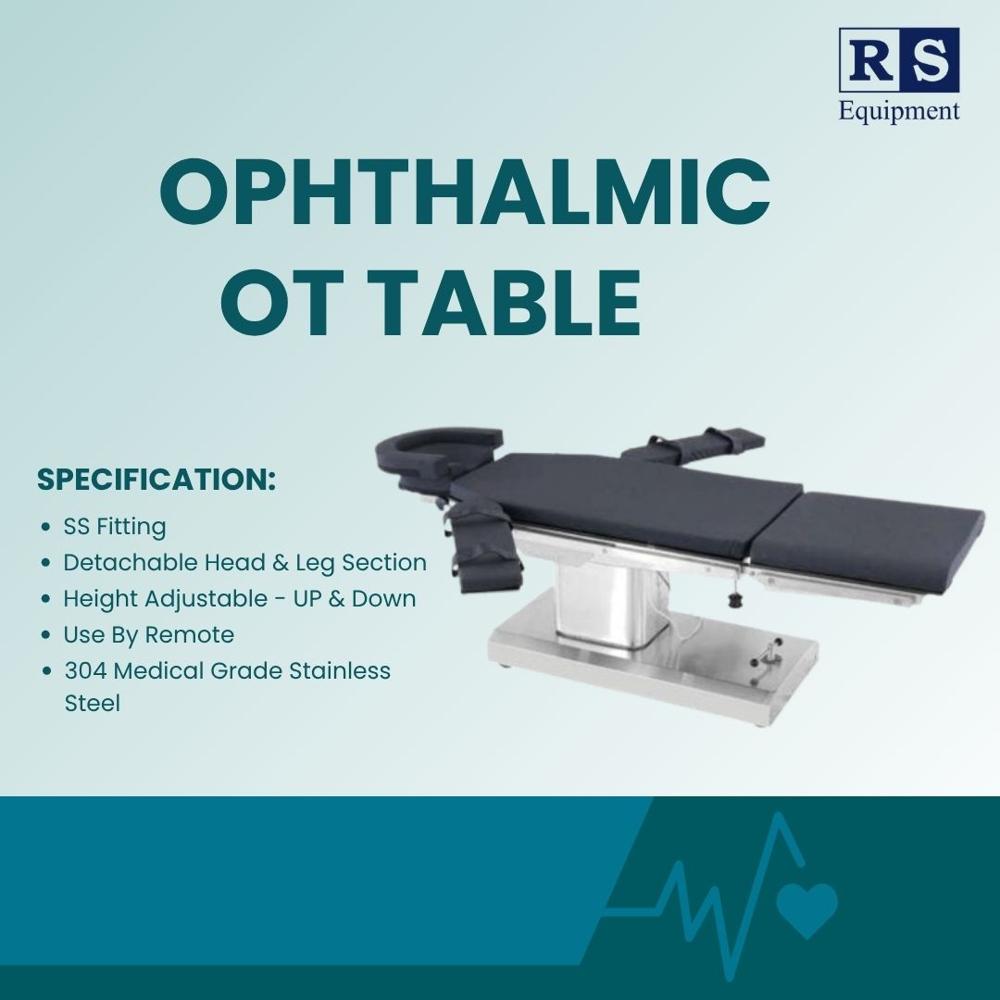
ophthalmic OT (Operating Table) is specially designed for eye surgeries and procedures. These tables are tailored to provide stability, precision, and comfort during microsurgical operations such as cataract surgery, retinal surgery, and LASIK. Below are the general
-
Low-Height Minimum: Allows surgeon to operate while seated comfortably.
-
Head-End Design: Often narrower to provide unimpeded access to the patients head.
-
Surgeon's Comfort: May include armrests or cutouts for surgeon's legs.
-
Microscope Compatibility: Designed to be compatible with ophthalmic microscopes.
-
Integrated Drainage Tray: For fluid management during eye procedures.
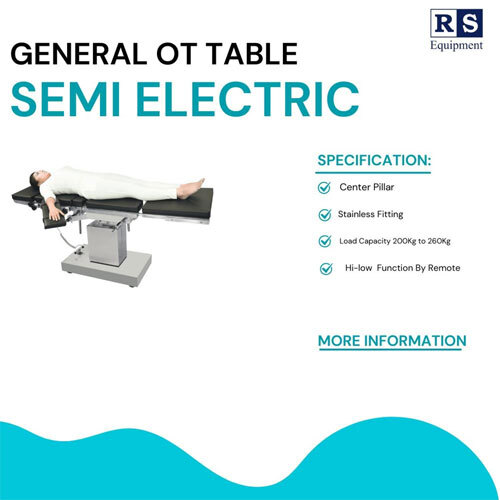
Designed for Precision and Patient ComfortThis ophthalmic OT table ensures precise positioning during eye surgeries. The adjustable features, including a radiolucent padded tabletop and articulating headrest, promote patient comfort and enable surgeons to work efficiently. The table's construction supports a high degree of ergonomic flexibility while providing reliable, sturdy support for all types of ophthalmic interventions.
Enhanced Safety and HygieneSafety is prioritized with a robust emergency stop and locking mechanism. A heavy, powder-coated base paired with antimicrobial coating and lockable castor wheels ensures a stable, sterile, and mobile platform in the operating theatre. The table is corrosion-resistant, promoting a long service life and minimizing maintenance needs.
FAQ's of Opthelmic OT Table:
Q: How is the height and backrest of the ophthalmic OT table adjusted?
A: Both the height (750 mm to 950 mm) and backrest angle (0 to 75) can be easily adjusted using the handheld remote control, which operates the electric linear actuator for smooth and precise positioning.
Q: What safety features does this table offer during eye surgery?
A: The table includes an emergency stop button and secure locking mechanisms to ensure immediate halting and absolute stability, safeguarding both patient and medical staff during procedures.
Q: When is the optimal use case for this ophthalmic OT table?
A: This table is specially designed for use in ophthalmic surgeries, including microsurgery and complex eye operations where stable patient positioning and radiolucency are essential.
Q: Where can this table be installed and used?
A: It is suitable for installation in ophthalmology operating theatres across hospitals, clinics, and dedicated eye surgery centers, with compatibility for standard medical environments due to its corrosion-resistant, antimicrobial materials.
Q: What is the process for moving and locking the table in place?
A: The table is fitted with heavy-duty, lockable castor wheels that allow effortless mobility. Once positioned as required in the operating room, the castors are locked for absolute stability during surgical procedures.
Q: What are the main benefits of the radiolucent tabletop and articulated headrest?
A: The radiolucent tabletop allows clear imaging if needed during surgery, while the articulating headrest with adjustable settings supports optimum patient head positioning for precise ophthalmic work.
Q: How long is the expected service life of this OT table, and under what operating conditions?
A: Built from high-quality stainless steel with a durable antimicrobial coating, the table is designed for a service life exceeding 10 years, functioning reliably in temperatures between 5C to 40C and humidity ranging from 10% to 95% RH.






 Send Inquiry

 Send Inquiry
 Send Inquiry
 Send SMS